
1. Festival Basics
2. Origin: Where History Meets Legend
There are many versions of the festival’s origin. The most widely circulated one is connected to Qu Yuan.
Who Was Qu Yuan?
A patriotic poet and politician of the Warring States Period (c. 340 BC), who drowned himself in the river out of grief and anger over the fall of his country.
How the People Mourned
People rowed boats to search for his body and threw rice balls into the river to keep fish and shrimp away — customs that gradually evolved into dragon boat racing and eating zongzi.
Other Origin Theories
- Nature worship — the ancients believed the 5th month was a “poisonous month” and the 5th day an “evil day,” requiring exorcism
- Commemorating Wu Zixu or Cao E — some regions honor other historical figures instead
3. Five Iconic Customs
🚣 I. Dragon Boat Race
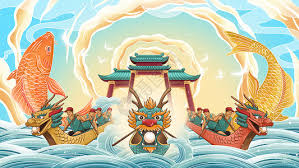
- The scene: painted dragon boats cut through the waves, drummers keep the rhythm, oarsmen roar, crowds cheer
- International reach: races are now held in over 80 countries, a bridge for Chinese-Western cultural exchange
🍙 II. Zongzi (Sticky Rice Dumplings)
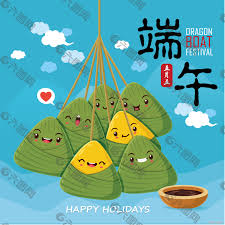
- What it is: glutinous rice wrapped in bamboo leaves with fillings of meat, bean paste, or egg yolk — steamed to fragrant softness
- North vs. South: the north prefers sweet (red dates, bean paste); the south favors savory (pork belly, salted egg yolk)
🌿 III. Hanging Mugwort & Calamus
- Scientific wisdom: mugwort repels insects, calamus kills bacteria — ancient answers to summer disease prevention
- Modern inheritance: many families still keep this custom, adding natural fragrance to the festival
🧧 IV. Sachets & Five-Color Threads
- Sachets: filled with herbs, symbolizing warding off evil and bringing blessings — also exquisite handicrafts
- Five-color threads: representing the balance of the five elements, tied to children’s wrists to pray for health
🍷 V. Realgar Wine
- Traditional ritual: drunk in small amounts or dabbed on the forehead to repel snakes and insects
- Note: realgar contains arsenic — it is mostly symbolic in modern times
4. Why It Belongs to All Mankind
- UNESCO recognition: inscribed as Intangible Cultural Heritage of Humanity in 2009, acknowledging its universal value
- Shared resonance: the customs echo global themes — honoring heroes, respecting nature, protecting health
- Modern innovation: from chocolate zongzi to Metaverse dragon boat races, ancient traditions are attracting younger generations in new forms
5. How to Experience It Yourself
- 🍚 Make your own zongzi — search for simple recipes; try bamboo leaves, or even palm/banana leaves
- 🚣 Watch a dragon boat race — held in many international cities: Sydney, San Francisco, London, and more
- 🧵 DIY sachets — sew your own with dried flowers and herbs, and gift them to loved ones as blessings
Conclusion: A Living Culture
The Dragon Boat Festival is not just an echo of history — it is a culture that lives today. It reminds us that the vitality of a festival lies in people’s love for nature, respect for ancestors, and the eternal pursuit of a better life.
Whether you’re tasting a zongzi or cheering for a dragon boat race, you are sharing the same cultural heartbeat with hundreds of millions of Chinese.
Wishing you all a happy Dragon Boat Festival! 🐉